Overview
No tarot card is more misunderstood. Death rarely predicts physical death. Instead, it marks the end of something that has run its course, a relationship pattern, a career phase, an identity you've outgrown. What makes this card powerful is its promise: endings are not optional, but what comes next is worth the loss.
Symbolism
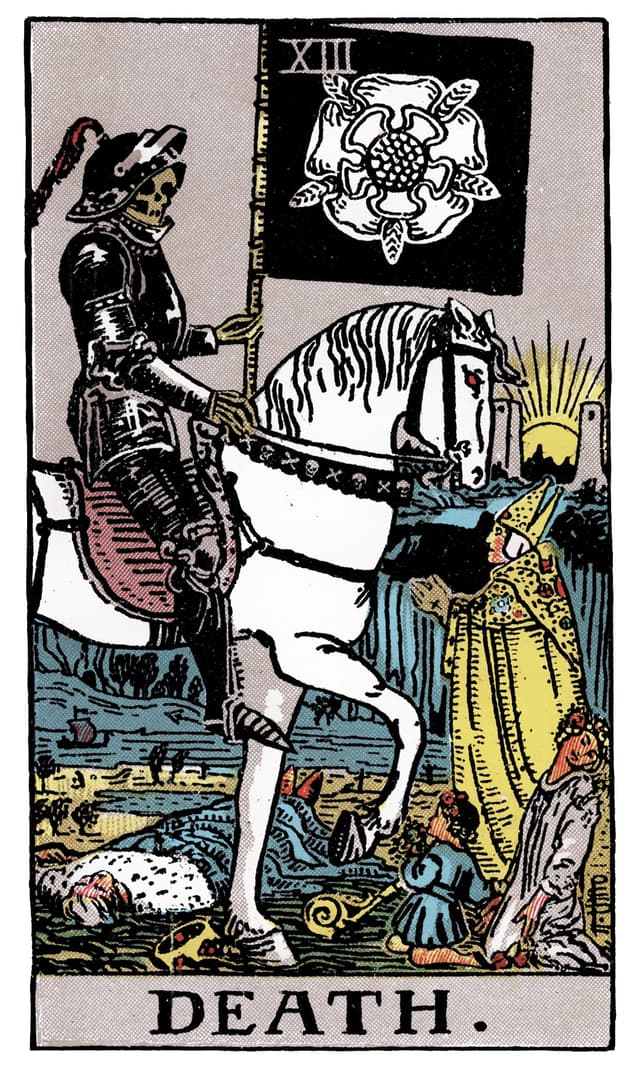
A skeletal rider on a pale horse moves steadily forward, carrying a black banner emblazoned with a white mystic rose, the symbol of life emerging from death. Before him, figures from every social class fall: a king, a child, a maiden, a bishop. No one is exempt. Between two pillars on the horizon, the sun of immortality rises, promising that something endures beyond every ending. The river in the background flows onward, indifferent to what falls.
Upright Meaning
In love, Death signals a transformation. A relationship may end, or it may fundamentally change character. Either way, the connection you knew is becoming something else. For those who are single, old patterns of attraction and attachment are dying off, clearing space for healthier dynamics. In career, expect a significant transition: leaving a job, a company restructuring, or the conclusion of a major project. Let it go. What comes next requires this clearing. Spiritually, Death is one of the most potent cards for genuine transformation. Old beliefs, habits, and identities are falling away. This is uncomfortable but essential. You can't carry the old self into the new life.
Reversed Meaning
Reversed, Death signals resistance to an inevitable ending. You're holding onto something that's already gone, whether it's a relationship, a role, or a version of yourself. This resistance creates stagnation, depression, and a sense of being stuck in limbo. The transformation is happening whether you participate or not. The reversal just means you're making it harder than it needs to be.
When You Draw This Card
Let go. Whatever is ending needed to end, and the grief you feel is proof that it mattered. Now make room for what's next.
Grounded in A.E. Waite's Pictorial Key to the Tarot (1911, public domain), with modern interpretation.