Overview
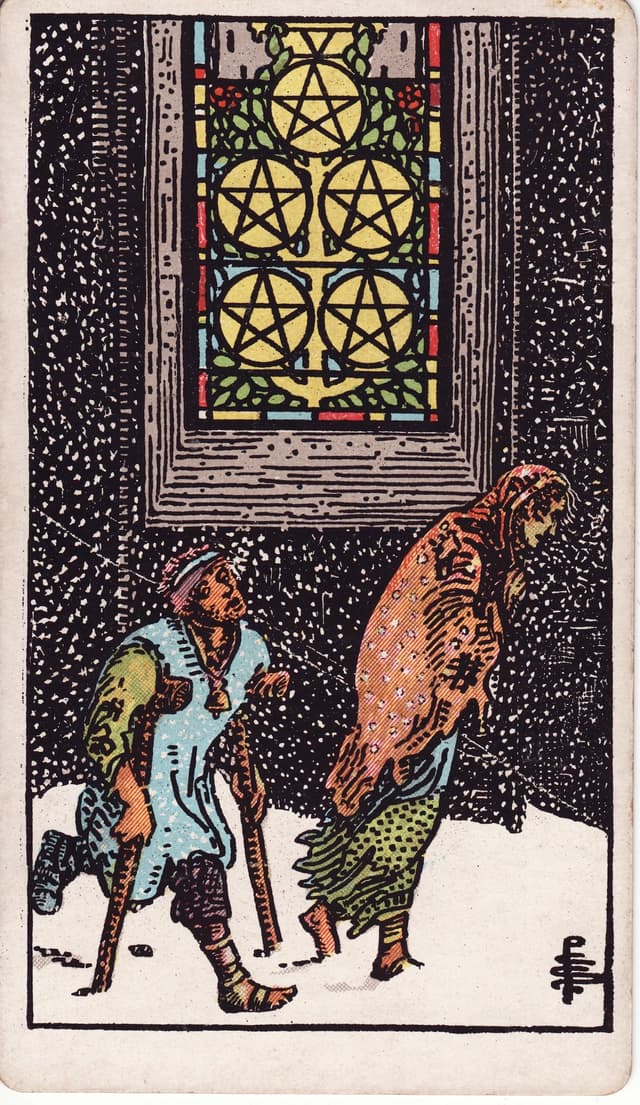
Two figures trudge through snow past a warmly lit church window. The Five of Pentacles captures material hardship, feeling left out, and the loneliness that comes from believing no one can help. But look at that lit window: help exists. The question is whether you'll walk past it or walk in.
Symbolism
Two destitute figures, one on crutches and one barefoot and shivering, walk through falling snow past a stained glass window depicting five golden pentacles. The window glows with warm light from inside, suggesting sanctuary, community, and resources that are available but unaccessed. The figures don't look up at the window; they look down at the cold ground. Their suffering is real, but their isolation may be partly self-imposed.
Upright Meaning
In love, the Five of Pentacles signals feeling excluded, rejected, or impoverished within a relationship. Financial stress strains the partnership, or emotional coldness leaves one person feeling shut out. If you're single, loneliness and the belief that love isn't available to you dominate. In career, financial hardship, job loss, or being passed over creates a sense of lack. The card acknowledges the real difficulty while pointing out that resources and support exist, you just need to be willing to ask for help. Spiritually, the Five of Pentacles represents the poverty of spirit that comes from disconnection. Material loss can trigger an existential crisis that, when met with honesty, leads to deeper understanding of what truly matters.
Reversed Meaning
Reversed, the Five of Pentacles signals recovery from financial or material hardship. Help arrives, you find the church door, or the worst of the crisis passes. Employment stabilizes, health improves, and the sense of isolation lifts. Sometimes the reversal warns that you're so accustomed to struggle that you can't accept help when it's offered.
When You Draw This Card
Look up. The lit window is there for a reason. Help, support, and warmth are available if you're willing to receive them.
Grounded in A.E. Waite's Pictorial Key to the Tarot (1911, public domain), with modern interpretation.